Stablecoin Savings: Are They Safe and Profitable in 2026?

If you are looking for a way to make effective use of cryptocurrencies, you may have come to mind the option of saving on stablecoins. That is also natural. If you can gain interest in digital currencies without worrying about price fluctuations, everyone should want to do so.
But there is something that comes to mind: Are stablecoin savings really safe and worth it in 2026? So here, I have explained all of them clearly.
What Are Stablecoin Savings?
Stablecoins are cryptocurrencies pegged to a real-world asset, usually the US dollar. USDT, USDC, and DAI are the most common ones. And their value stays close to $1, which makes them less risky than assets like Bitcoin or Ethereum.
They work like a crypto version of a bank savings account. When you deposit your stablecoins into a platform, the platform pays you interest over time. So, it's a simple concept, but the details really matter.
Why People Are Using Stablecoin Savings in 2026
Some traditional banks still have very low interest rates on ordinary deposits. In many countries, if you get an annual interest rate of 1-2%, you will be lucky. On the other hand, stablecoin deposit platforms may offer much higher yields.
With this disparity, many regular savers and cryptocurrency holders are moving to a platform where they can earn interest on USDT and other stablecoins. The yield can range from 4% to 15% or more, but depends on the platform and the type of savings plan you choose.
These moves are not limited to crypto-asset enthusiasts. The public, fed up with the bank's low yield, is also starting to consider this option.
How Do Stablecoin Savings Work?
Here are two main types of savings plans that you'll find on most platforms.
Flexible Savings
A flexible crypto savings allows you to earn interest without a lock-up period by simply depositing stablecoins. Withdrawal is possible at any time without penalty. Interest rates are slightly lower than fixed plans, but they are very important in a situation where the market is suddenly changing because funds can be managed completely. Some platforms including CoinEx flexible savings offer flexible stablecoins savings products that allow users to access funds without a fixed lockup period .
Fixed Savings
Fixed crypto savings mean you lock up your money for a set time usually 7, 14, or 30 days. And in exchange, you get a higher interest rate. Once your funds are in, you can’t touch them until the term ends. So this option makes sense if you’ve got stablecoins just sitting around and you’re sure you won’t need them soon. Fixed term products such as CoinEx fixed savings are also available on some exchanges for users who prefer predictable savings periods
Are Stablecoin Savings Actually Safe?
This is the most important question and requires real answers. Savings with stablecoins are not zero risk. The actual risks you should know are:
1. Platform Risk:
If an exchange or platform that is using platform risk is hacked, broken, or mismanaged, the funds may be lost. In the past, some platforms have actually experienced such cases. Always check the platform's performance, security measures, regulatory status, etc.
2. Risk of Stablecoin:
Even stablecoins may collapse peg (fixed to $1). Some algorithmic stablecoins have completely collapsed. Choose from proven ones like USDT and USDC that have maintained a $1 value over a long period of time.
3. Risk of smart contracts:
Many DeFi savings platforms use smart contracts. If there is a bug or vulnerability in the code, funds may be leaked. Centralized platforms eliminate this risk, but they create their own trade-offs.
4. Regulatory Risks:
Crypto laws keep shifting in 2026, and the rules can look totally different depending on where you live. If you’re into crypto savings, check your local laws often because things can change fast. If you choose a proven platform, stablecoin savings are relatively safe. Never invest more than the amount you may lose.
Are They Profitable in 2026?
Yes, it is possible. However, it depends on where you leave it.
With established platforms, stablecoin savings products may offer currently one of the highest APY rates in the market. Interest rates vary depending on market conditions, platform policies, flexible plans or fixed plans.
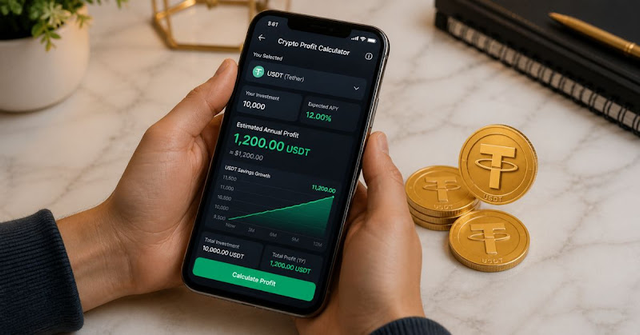
For example, if you own a USDT of $10,000 and you get an APY of 8%, you get an annual profit of $800. Not so much as life changes, but it is definitely better than the deposit rates offered by many traditional banks.
And the key is the compound advantage effect. If profits are reinvested continuously, returns will increase over time. Currently, many platforms support auto-compound functionality that automatically performs this.
Who Should Consider Stablecoin Savings?
The Stablecoin savings is best for:
• Those who already own USDT, USDC, and other stablecoins and want to make better use of them.
• Those who want to earn on idle BTC, or idle ETH when the market fluctuates.
• Those who are looking for higher returns than traditional banks without fully assuming the risk of price fluctuations in cryptocurrencies.
Tips Before You Start
• Start with a small amount. Do not deposit the full amount of your savings into one platform. First, try it for a small amount.
• Diversify across multiple platforms. And don’t keep all stablecoins in one place.
• Read the Terms of Use carefully. Check whether the deposit is liquidity or fixed, and to what extent is the penalty (if any) at the time of early withdrawal.
• Check the platform's track record. Check for audit reports, security reviews and how long the platform is running.
• Understand the tax. In many countries, interest earned on stablecoins is taxable income.
Final Thoughts
Stablecoin savings are one of the most approachable strategies for earning a passive income in crypto. They typically outperform most banks and with correct action the risks of investment can be controlled.
But "safe" in crypto is always a relative term. No platform is 100% risk-free. So the bottom line is this; Do your research, use reputable platforms and never invest what you can’t afford to lose.
Stablecoin savings are a tool for the crypto-native and newcomer alike, so they can earn stable and low-volatility returns on their capital in 2026. Just head in with your eyes open and a comprehensively thought out plan of action.